Brake issues rarely arrive with a fanfare. They creep in over weeks, repeatedly months, as pad subject matter thins, hardware loses its spring, and rotors advance tiny grooves you won't be able to see from the driving force’s seat. By the time a driver feels an extended pedal or hears a grinding roar at stoplights, the damage is continually performed. I have spent adequate hours at a lift, flashlight in my the teeth, to know that early detection saves rotors, continues calipers suit, and stops the more or less white‑knuckle moment no one forgets. This aid distills what our technicians look and pay attention for daily, at the side of the judgment calls that include precise street stipulations and the several pad versions.
What brake pads correctly do, and why they wear
A brake pad is a friction fabric bonded to a metallic backing plate. When you press the pedal, hydraulic stress squeezes the pad opposed to the rotor. Friction converts movement to warmth, then vents it into the airstream. Every quit consumes a dusting of pad materials. City riding, hauling, mountain descents, and aggressive braking all accelerate that loss.
Most fashionable pads are one in all 3 families: semi‑steel, ceramic, or low‑steel NAO. Semi‑metallic pads chew rough while chilly and tolerate warmness, widespread on vehicles and efficiency programs, and so they are usually noisier. Ceramics shed much less filth and in many instances run quieter, known on sedans and crossovers, they usually usually mask noise signs even as they thin. Low‑metallic NAO pads occupy the midsection. None of them are immortal. The wear price depends at the weight of the car, tire grip, rotor cloth, and how most of the time you sluggish from throughway speeds.
A suit pad starts off its existence round 10 to twelve millimeters thick, no longer counting the backing plate. Pad makers embed a steel wear indicator in lots of designs that begins to chirp whilst the final friction layer is ready 2 to a few millimeters. Some cars add an electronic sensor that trips a sprint warning. The pad should in no way wear right down to the backing plate. Once metallic meets iron, the rotor loses a layer with every quit, and the fix invoice climbs.
Sounds that count number, and sounds that do not
Noise is the language brakes use when they favor recognition, however it will not be a unmarried dialect. Over the years, I actually have heard the entire catalog in our auto restore keep bays.
A constant, prime‑pitched chirp that alterations with speed, louder in the last few toes beforehand a quit, in most cases skill the mechanical wear indicator is doing its process. Think of it as a smoke alarm at low battery. The brakes nonetheless work, yet you're on borrowed time. If that chirp vanishes the moment you touch the pedal, it suits the identical development.
A coarse grinding, above all less than light braking, is a more urgent sign. By then, friction drapery is long gone or asymmetric enough to enable metal contact metallic. The sound is unmistakable, like a coffee grinder. Grinding most of the time pairs with a shiny interior rotor face and warmth striping. Expect to update rotors and pads at the same time. Ignore it, and a caliper piston can overextend or snatch, which turns a honest brake pad replacement into caliper provider.
A groan on chilly mornings after rain can be innocuous. A thin movie of rust varieties on rotors overnight. The first few stops scrub it off. If the noise fades inside a half mile and does now not return, that's general. The same goes for a faint squeal the first time ceramic pads chunk after a wash. Moisture ameliorations friction quickly. What just isn't favourite is a squeal that repeats warm or bloodless, rain or shine, and gets worse over a week. That is a pad asking to be measured.
Ceramic pads complicate the soundtrack. They run quiet even close the wear and tear restriction. Drivers used to older cars look ahead to a squeal that certainly not comes. On those motors, pedal suppose and preventing distance develop into extra sturdy clues than noise.
How the pedal and steering wheel speak to you
Brakes are a feel formula as a lot as a legitimate manner. A properly pedal holds organization at a steady peak with a constant deceleration as you add force. When pads wear and hardware a while, that tactile readability blurs in just a few numerous ways.
A delicate or low pedal can aspect to several topics, yet worn pads through themselves do now not make the pedal sink. The caliper piston simply travels farther to soak up the gap. If the pedal continues touring, feels spongy, or pumps up then fades, bear in mind brake fluid and hydraulics. Old fluid that has absorbed moisture boils quicker, especially after a downhill grade, and that introduces compressible vapor into the traces. If you haven't flushed fluid in two to 3 years, positioned that in your automobile renovation plan. It is a separate service from an oil modification, and each depend in one of a kind approaches.
A vibration within the steerage wheel or a pulsing pedal lower than agency braking ordinarilly tracks lower back to rotor themes, recurrently known as thickness edition or challenging spots from overheating. Worn pads can set off this by strolling too scorching or by moving uneven subject material. If you experience that shake from toll road speeds, notably on a descent, pads can also nonetheless have several millimeters left, yet they may be now not running on a flat, desirable floor anymore. At that factor, the inspection specializes in rotors first, then pad face circumstance, and the way the caliper slides cross.
A pull to 1 facet below braking indicates one caliper clamps tougher than the opposite. Sticking caliper pins, seized pistons, or a contaminated pad can do it. On automobiles which were as a result of a flood or a wintry weather of road salt, it's wide-spread. It can even mask as a tire predicament. Swap the front tires left to perfect and road scan to ascertain. If the pull stays with braking, flip your attention to the caliper and pad on the facet that grabs.
What you can actually see with out a lift
Drivers recurrently ask if they will payment pads at domestic. With the desirable mild and a bit of of care, that you may. Park on level flooring, set the parking brake, and flip the steering wheel complete lock to the left to view the excellent the front brakes, then to the proper for the left part. Through many wheels, you can spot the outer pad in opposition t the rotor.

Use those immediate curbside assessments:
- Compare pad thickness to a nickel. If the friction layer appears thinner than the coin’s edge, you're in the red region, close to 2 millimeters. Look for a deep groove or lip at the rotor’s outer edge. A pronounced ridge method the rotor has worn enough that machining might not refreshing it up. Inspect for choppy pad put on, tapered from one quit to any other. That tricks at a frozen caliper slide or bent hardware. Shine a easy for rust flakes round the pad ears and abutment clips. Excessive corrosion binds pads, slowing their liberate and cooking them. After a brief drive, hover a hand close each wheel, do no longer touch the rotor, and feel heat. One corner tons warmer than the others exhibits a dragging pad or sticky caliper.
The rear brakes are harder to peer, in particular if they may be drum trend instead of discs. Drums disguise the friction textile exclusively. Symptoms of worn rear sneakers incorporate a low parking brake lever, negative grasp on hills, and a scraping sound that modifications with brake software. Many compact automobiles and older SUVs nonetheless run drums at the rear, and that they deserve awareness at well-known durations.
Dash warnings and what they in actuality mean
Many overdue‑model cars tie brake put on into the device cluster. A yellow brake pad symbol or a message like “Check brake pads” trips while an digital sensor circuit opens. That circuit is embedded in a single pad at every one monitored corner. It triggers while that pad on my own reaches its minimize. The different pads might be a millimeter more advantageous or worse. Treat the light as a cross‑now instantaneous, not a suggestion. The longer you wait, the better the danger that rotor surfaces or caliper piston boots get damaged by way of warmness.
Do no longer confuse the red brake warning gentle, which on the whole shares responsibilities with the parking brake and hydraulic formulation. If that pale comes on although using and the parking brake is absolutely released, pull over appropriately. The components may be low on fluid, which regularly happens as pads wear, however it will also suggest a leak. Topping off without searching the rationale is a gamble. That is a moment for a tow and a real motor vehicle diagnostic at a trusted car restoration save.
ABS lighting fixtures are their very own universe. They do not inform you about pad thickness. They report on wheel velocity sensors, tone rings, and hydraulic modulators. A automobile will have appropriate pads and nonetheless pale the ABS lamp. Likewise, a car could have worn out pads with no ABS caution in any respect.
How a long way is just too far, in millimeters and miles
The size that subjects maximum is pad thickness. New pads at 10 to twelve millimeters give you a wide window. At 6 to 7 millimeters, you're inside the drawing board. At 3 to four, it is time to agenda. At 2, the mechanical indicator begins to sing on many pads. Below that, metal bites metal. In miles, this window varies wildly. I have visible experience‑share sedans burn with the aid of a front set in 15,000 miles in dense urban site visitors and considered road commuters stretch pads previous 60,000 miles with easy riding. Trucks that tow in summer heat, minivans stuffed with circle of relatives tools, and efficiency vehicles pushed complicated, all swing to the quick facet of that selection.
Rear pads oftentimes final longer when you consider that braking bias favors the front, in general 60 to eighty p.c up front. Regenerative braking on hybrids and EVs pushes pad existence a long way longer. It is not very exclusive to examine a hybrid with 70,000 miles and to find authentic pads above 7 millimeters. That does not mean the brake system will be missed. Long periods with out friction braking can glaze rotors or clutch slide pins that under no circumstances cycle absolutely. Periodic provider keeps them transferring.
Edge cases that idiot even experienced ears
Not each and every squeal or pull way pads are at the restriction. Here are cases that name for a careful learn.
Brand new pads can squeal for a day if they had been now not bedded desirable. Bedding involves a series of slight stops from 30 to 40 mph to move a fair film of pad drapery onto the rotor. Skipping this step can leave choppy deposits that sing. A true rebedding, if the pad compound facilitates, can medication it.
Glazed pads, vivid like a reflect, lose chunk and make noise. This occurs after an extended downhill with heavy braking or whilst a caliper sticks and chefs the drapery. The pedal feels arduous, preventing distances grow, however the pads still degree above 3 to 4 millimeters. Sanding the glaze frivolously and solving the root reason frequently saves the set, yet if warmness has cracked the floor or roasted the resins, replacement is the good call.
Contaminated pads act surprising. A leaking axle seal on a rear drum, a weeping caliper banjo bolt, or over‑sprayed lube on rotor faces can turn silence into groans. Cleaning rotors and replacing affected pads solves it. Driving with infection risks glazing and rotor warm spots.
Wheel and tire adjustments play a function. Aggressive tread patterns can sound like unhealthy brakes at low speed. A bent wheel or unevenly torqued lug nuts can mimic a brake vibration. Any time a vibration seems right after a tire rotation or wheel switch, retorque first, then consider brakes.
Cheap pads can trick you. Bargain friction cloth every so often contains inconsistent compounds. The first 2,000 miles might be quiet, then squeal units in. Or the pads create gobs of dust, coating wheels in per week. We take care of a brief listing of pad manufacturers and compounds that have tested regular across car or truck structures therefore.
What we look into at the store, past the fast look
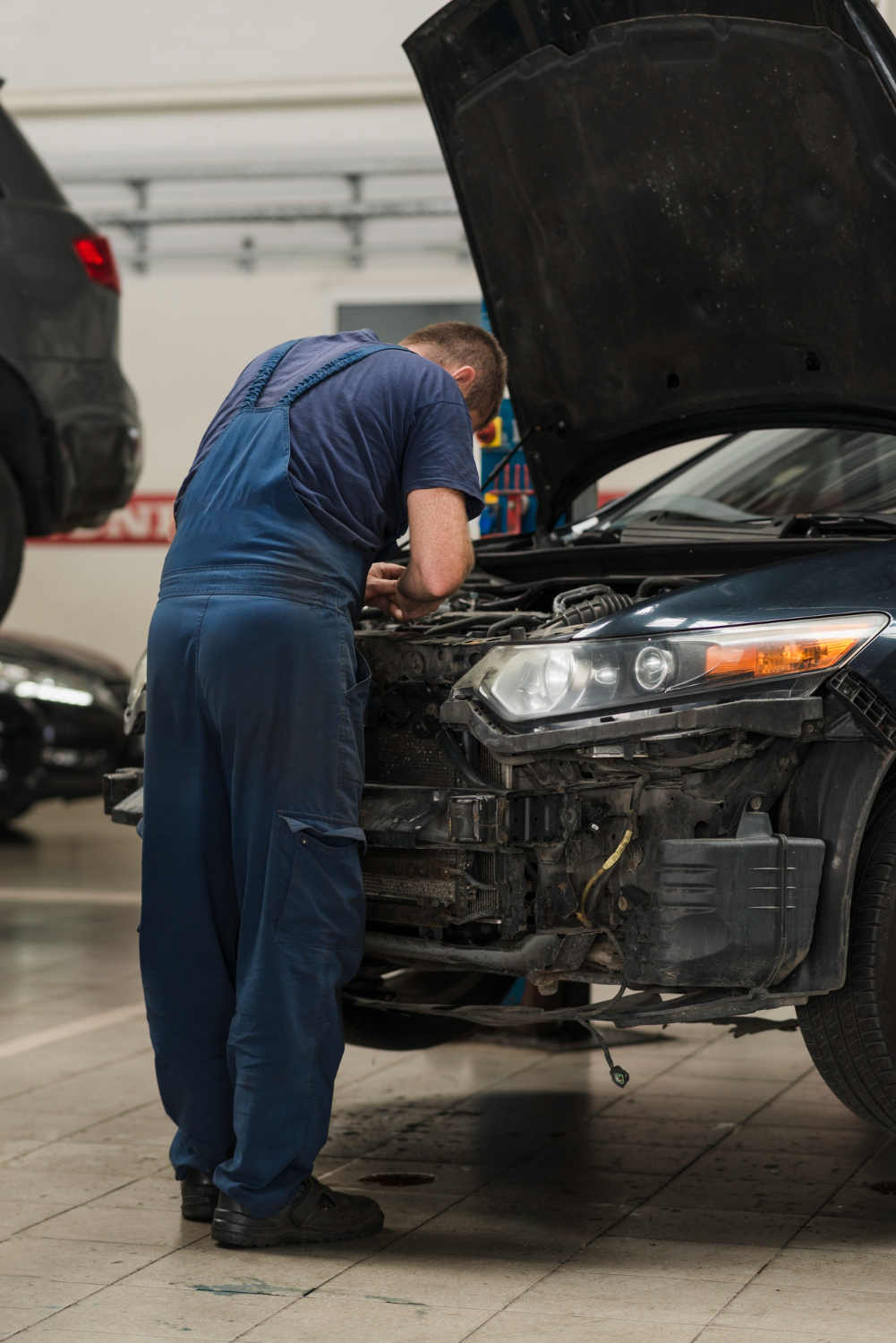
When a vehicle rolls into our bay for brake worries, the manner appears the equal whether or not the complaint is a squeal, a pull, or a vibration. We start off with a street try. Speed matters. A noise merely among 10 and 20 mph facets in a single path, a vibration beneath corporation braking at 60 mph features in one other. We listen with the home windows down, then up, and determine the parking zone for clues like fluid drips or rusty rotor faces after rain.
On the elevate, wheels off, the visible tells its story. We degree pad thickness at either ends of the pad to envision taper. A 2 millimeter difference from most advantageous to trailing part tips at hardware crisis. We examine rotor surfaces for scoring, rough spots, and blue warmness marks. We use a micrometer to degree rotor thickness and a dial indicator if we suspect lateral runout. If a rotor is on the brink of or under minimal thickness, replacement beats machining. Thinner rotors overheat immediately and are liable to warping.
Caliper slides may still circulate with finger stress. Frozen slides chew one pad at the same time any other seems to be new. Boots need to be intact and greased with the right prime‑temp silicone or moly paste, now not no matter is readily available. Piston dirt boots which are cracked invite moisture and corrosion. Flex hoses get a near appear on the grounds that a collapsed inner liner can act like a assess valve, protecting tension on a caliper and causing a chronic drag.
Hardware isn't really an afterthought. Abutment clips, anti‑rattle springs, and pad shims all shape noise and put on styles. Reusing rusty or bent hardware invitations comebacks. On drum brakes, go back springs, adjusters, and wheel cylinders take center level. A caught adjuster leaves the pedal lengthy and the parking brake vulnerable even though the footwear measure properly.
We do not forget brake fluid circumstance too. Dark, moisture‑weighted down fluid lowers the boiling level. On automobiles that have worked challenging, a fluid try out strip or a boiling aspect take a look at supplies data we are able to reveal. If contamination is show, a flush is a part of the provider. At the related talk over with, many purchasers agenda an oil modification or ask for a car battery alternative try out for the reason that motor vehicle is already with a mechanic. Bundling pursuits motor vehicle preservation like that saves time and supports trap different themes early.
When to replace pads, and what to change with
Pad option things. If you tow, live in the mountains, or own a heavy SUV, a quality semi‑steel set paired with matching rotors and brand new hardware provides predictable chunk and warmth tolerance. If you each day a sedan and prize quiet wheels, a ceramic set with low grime is ideal. Cheap rotors paired with top rate pads hardly ever convey the envisioned experience. The entire equipment desires to be well suited.
Replace pads beforehand the wear indicator sings if you happen to word any blend of these: pad thickness at 3 to four millimeters, a growing pedal pulsation, visual scoring on rotors, or choppy put on from hardware complications. Waiting to hit the closing millimeter gambles with rotor lifestyles, and rotors money extra than pads. On automobiles with a wear sensor mild, time table the provider as quickly because it seems. On vehicles with song packs or outsized brake programs, check extra in general. High‑functionality setups run warmer and devour pads turbo.
For hybrids and EVs, prefer pad compounds rated for regenerative structures. They control gentle, intermittent friction and extended disuse with no glazing. Even nevertheless regeneration saves pad lifestyles, the brake equipment still desires periodic mechanical activity. Many provider schedules call for hunting down pads, cleaning slides, and re‑lubing once a year or each and every two years in high humidity or salted street areas.
What which you can do between offerings to increase pad life
Driving form has the biggest outcome. Look a ways in advance, coast early, and hinder dragging brakes on lengthy descents. On steep hills, downshift an automatic to a slash gear to add engine braking. Learn the persona of your adaptive cruise keep an eye on. On some cars it brakes past due and arduous. Leaving an extended gap reduces the wide variety of micro‑stops in site visitors.
Keep tires right inflated and aligned. A tire that drags the auto left forces you to ultimate with the wheel and pretty much with the brakes. Aligned, flippantly worn tires give up straighter and swifter. If you consider a brand new pull after a tire provider, point out it rapidly. It is additionally as easy as asymmetric lug torque.
Schedule periodic inspections. If your vehicle sees by and large urban miles, have a mechanic degree pads at each and every oil difference. A rapid look can catch a caught slide or a weeping caliper previously it ruins a group of pads. If you force as a rule road, each different oil modification is ceaselessly wonderful. For buyers who talk over with us for Car AC repair in the hotter months, we routinely pair that appointment with a brake money, considering each techniques go through under warmness.
Store the automobile properly. If you are parking for weeks, prefer a dry spot and roll the auto a foot or two every few days to substitute which component of the rotor rests below the pads. Long contact in humidity can print pad outlines into rotors, top-rated to a shudder later.
When a fast money turns into a full brake job
A pad slap, the shorthand for only swapping pads, is tempting should you are in a rush. Sometimes it can be best suited. Newish rotors with a soft face and no lip, slides that movement like new, and pads that wore evenly can take delivery of a brand new set with out drama. In our keep, it is the minority. More routinely, a right kind provider incorporates new pads, new rotors, contemporary hardware, cleaned and lubricated slides, and a brake fluid flush if the calendar calls for it. On older automobiles, plan for one or two surprises, like a stripped caliper bracket bolt or a hose that shows its age when moved.
We expense and plan in keeping with what the inspection unearths, not a one‑measurement kit. The target is a excessive, enterprise pedal, directly stops devoid of noise, and system so that you can remaining the expected c language. Shortcuts coach up six months later as squeaks, asymmetric wear, or pulsation. It expenses less to do it precise as soon as than to do it twice.
Simple red flags that imply it's time to ebook carrier now
Use this short, no‑guesswork list to resolve whilst to seek advice from a skilled:
- Any grinding noise underneath braking, even as soon as, fairly if it grows louder over days. A brake pad or brake formula caution mild at the dash. Steering wheel shake or pedal pulsation that you can actually reproduce on any power. A pull to at least one side merely whilst braking, no longer gift at continuous speeds. Fluid at the inside of of a wheel, a smooth pedal, or the crimson brake warning lamp while using.
If any of these appear, agenda with an car repair shop you consider. Do not look forward to the following oil modification slot. The sooner a mechanic inspects the system, the more likely you can retailer rotors and keep away from caliper destroy.
How brake carrier fits into the larger repairs picture
Brakes do now not stay by myself. Battery voltage affects ABS modules and digital parking brakes. A vulnerable battery can throw phantom codes that muddy a automobile diagnostic consultation. If your battery is older than 3 to 5 years, pair brake paintings with a vehicle battery alternative experiment. Suspension situation shapes brake believe too. Worn struts enrich nostril dive, lengthening stops and making the the front pads paintings overtime. Tire quality and age spherical out the equation. A https://maps.app.goo.gl/7WEB8UjBoyUX21jv5 price range tire that loses grip early forces the ABS to paintings more durable and stretches stopping distance in spite of absolute best pads.
We traditionally fold brake inspections into seasonal renovation. Before summer trips, alongside Car AC repair checks and cabin filter out variations, we measure pads and brake fluid moisture. Before winter, while roads are rainy and chilly, we make certain hardware is fresh and lubricated so pads unlock cleanly and do not drag in salt and slush. For fleets and paintings vehicles that tow, we counsel shorter periods. The check of downtime dwarfs the price of preventive carrier.
A notice from the bay: two brief stories
A contractor introduced in a half of‑ton pickup with a faint squeal he heard handiest in the time of low‑velocity regional stops. Pads measured three millimeters on the outer edge and 1 on the inner, with a seized diminish slide pin at the passenger front caliper. He had a pass‑country tow deliberate that weekend. Rotors confirmed heat recognizing however were still at service thickness. We replaced pads and rotors up the front, rebuilt and greased both facets’ slide pins, and flushed the fluid, which validated near the boiling level surface. He stopped through a month later after hauling a 5,000‑pound trailer due to the Rockies. The pedal nevertheless felt new, and he had no more noise. Catching that pin seemingly saved the caliper and his holiday.
A rideshare driving force got here in complaining of a shudder from dual carriageway speeds. He had replaced front pads at a swift‑service location 3 months past. No rotors. No hardware. The new pads had left asymmetric deposits on vintage, fairly warped rotors. We measured 0.0015 to zero.002 inches of thickness version, adequate to create the pulse. Installing matched rotors and precise bedding the pads constant the vibration. He now budgets to substitute rotors with each front pad set, more or less each 25,000 to 30,000 urban miles, which aligns with his obligation cycle.
Final directions you'll trust
Recognizing worn brake pads is a component listening, element feeling, and phase measuring. If you listen a consistent squeal, consider a creating pulse, or see pad thickness near a nickel’s part, you're close. Grinding, any caution pale, or a pull lower than braking potential do now not wait. A thorough inspection seems past the friction layer to hardware, caliper objective, rotor situation, and fluid health and wellbeing. That is the place trip will pay off. A pro technician can separate risk free chilly‑morning rust noise from a pad on its last millimeter, or a tire‑prompted vibration from a rotor situation.
Treat brakes as a approach, not a set of pads. Use great components matched in your driving, update or service hardware whenever, and retain fluid sparkling. Fold brake checks into regimen carrier along your oil change, tire rotations, and different necessities. If you are in doubt, quit by means of a credible car repair keep and ask for a fast measure and street attempt. Five mins on a lift can prevent a tow, a rotor, and a scare later.
Our bays keep busy due to the fact that traffic, warm, and hills put on on automobiles. With a little consideration and well timed provider, your preventing vitality can consider as regular at 50,000 miles because it did the day you drove off the lot. That peace of brain is the precise payoff of magnificent car restore and top conduct behind the wheel.